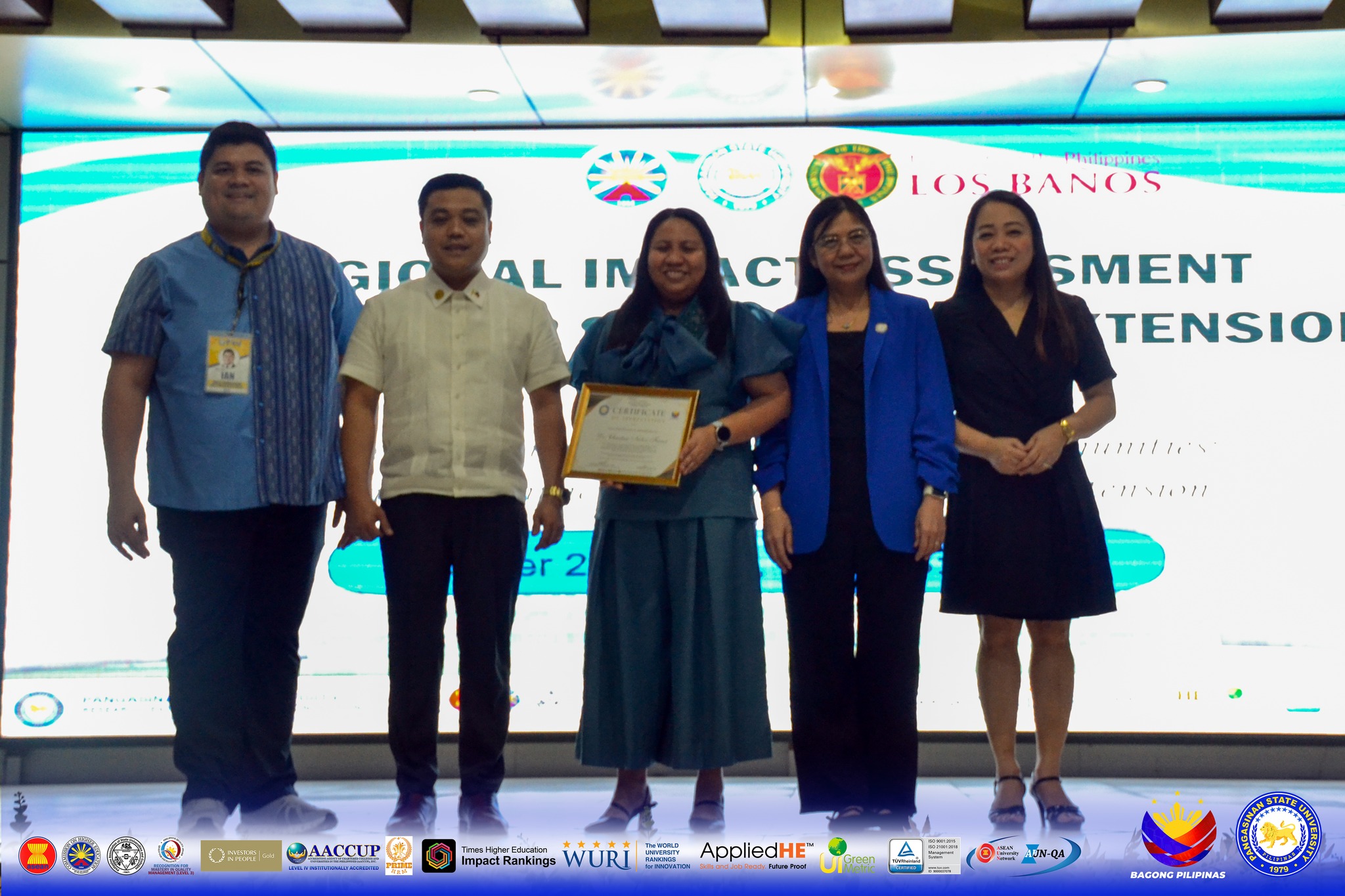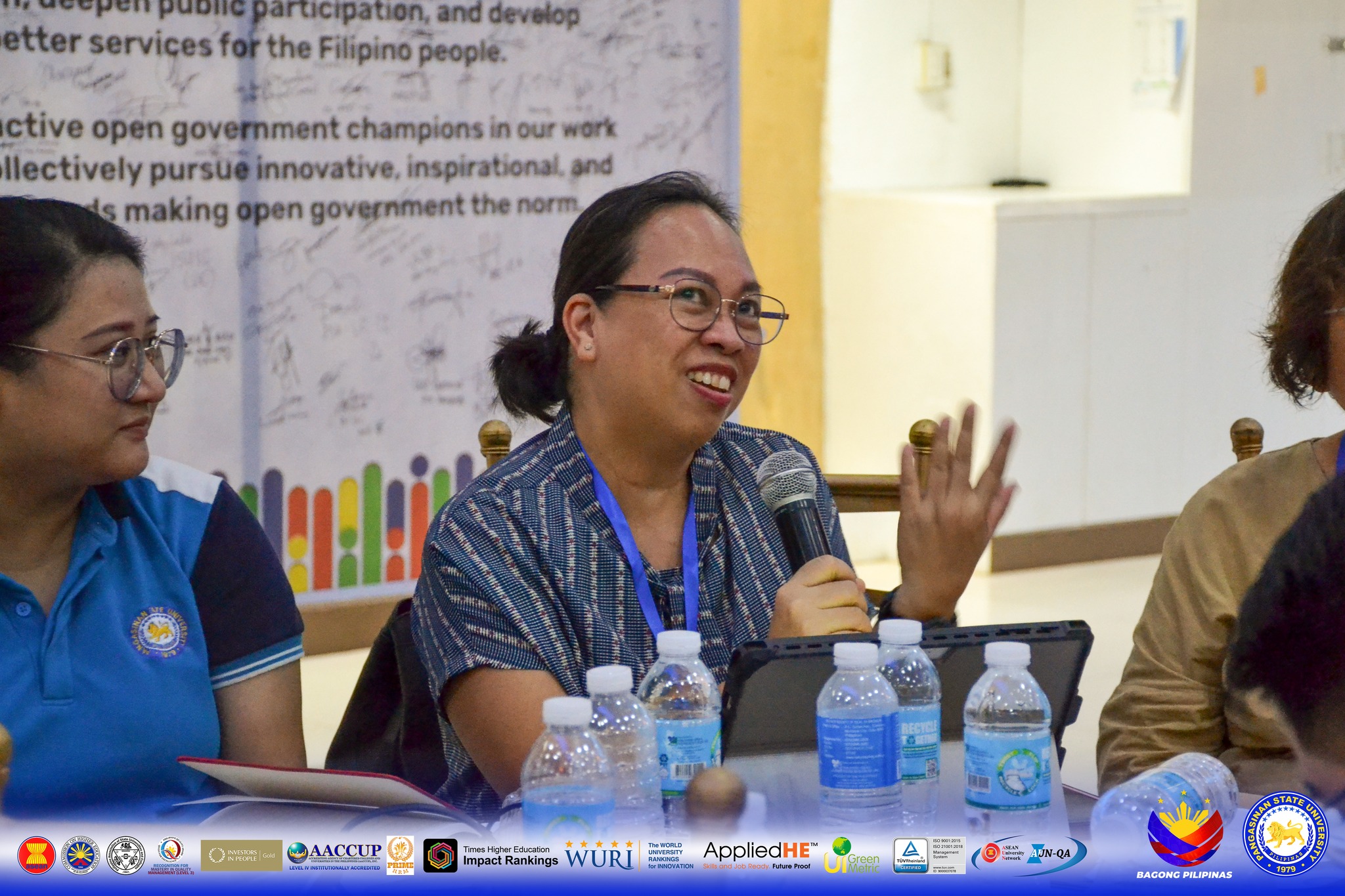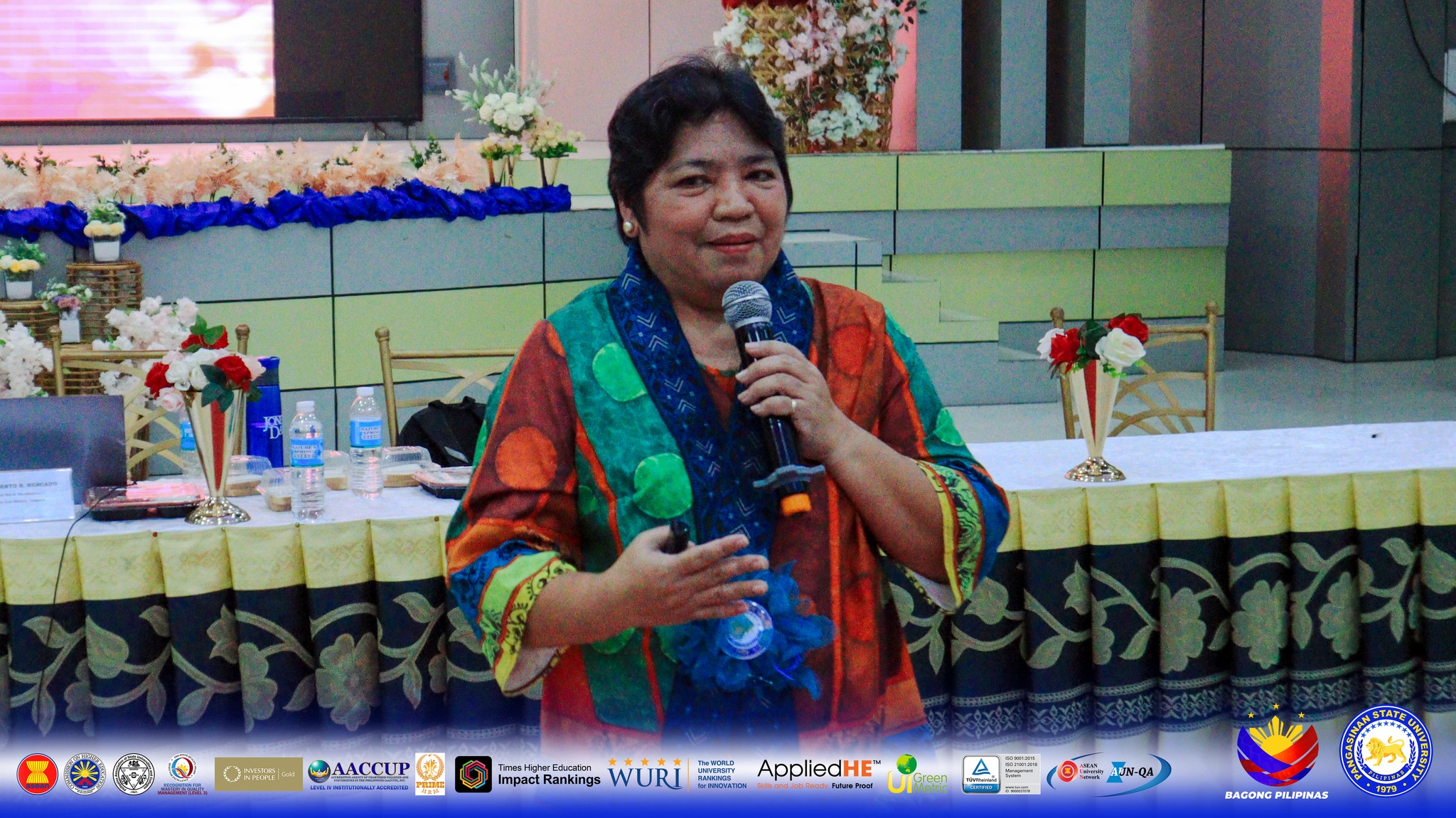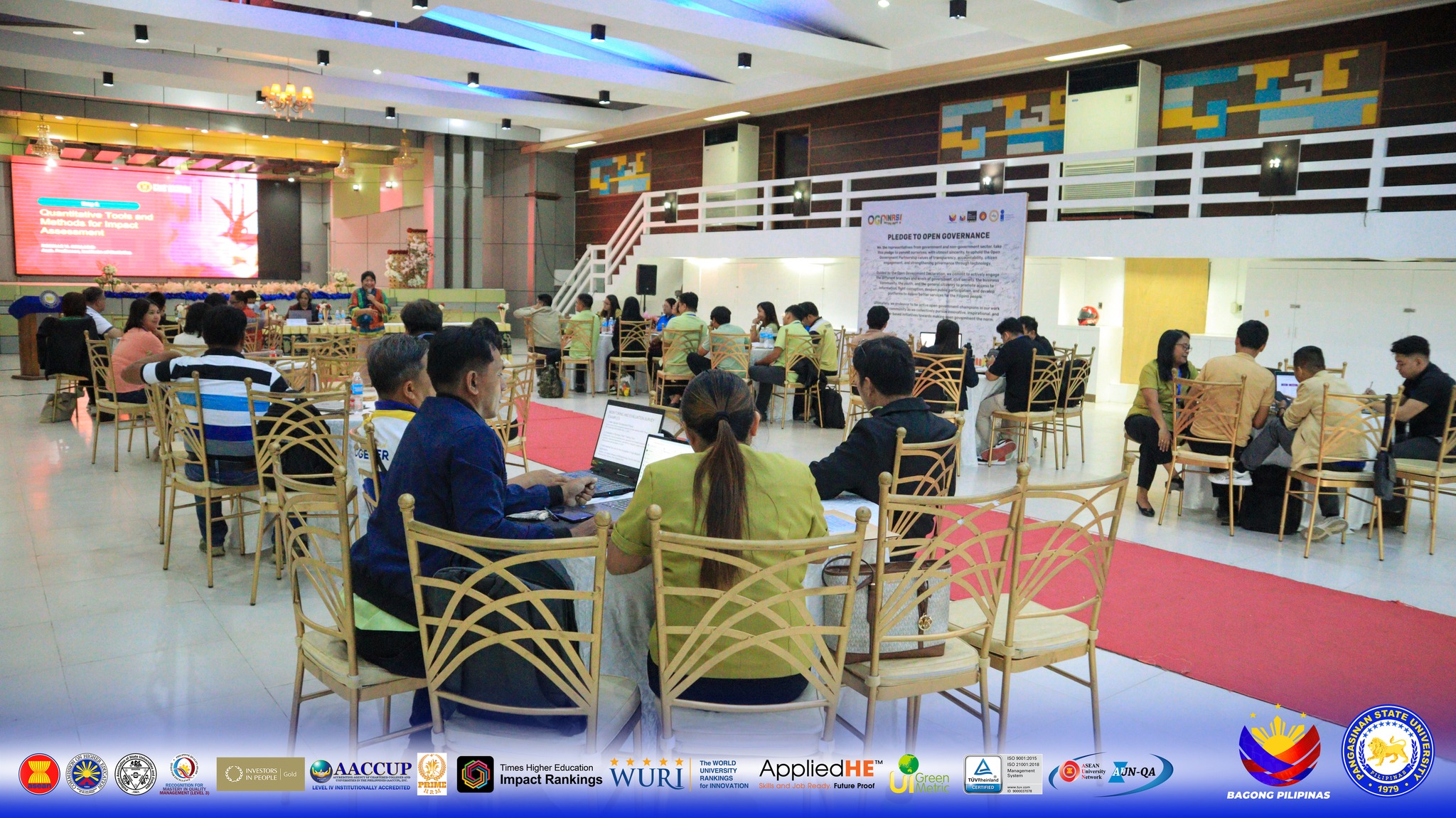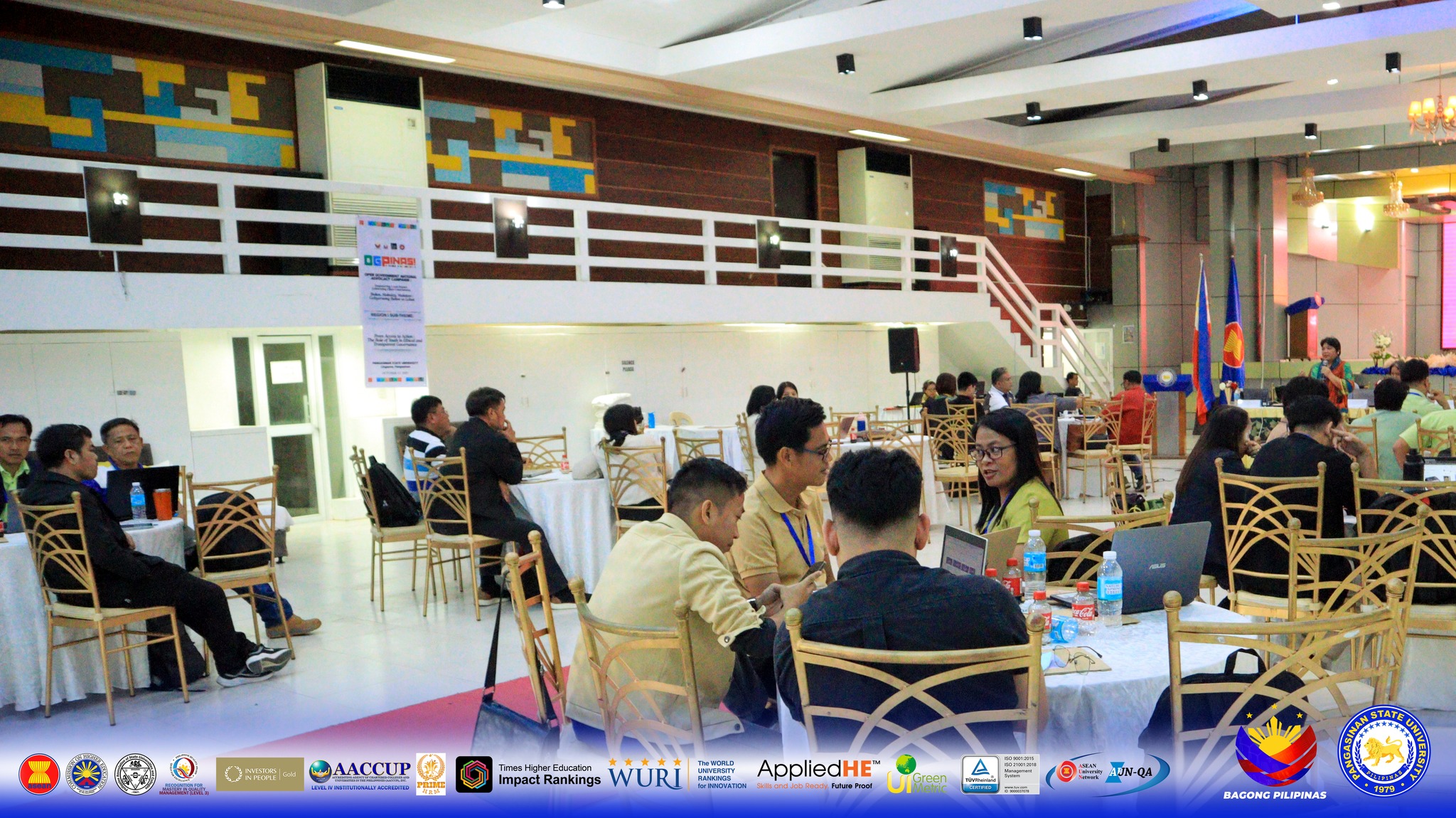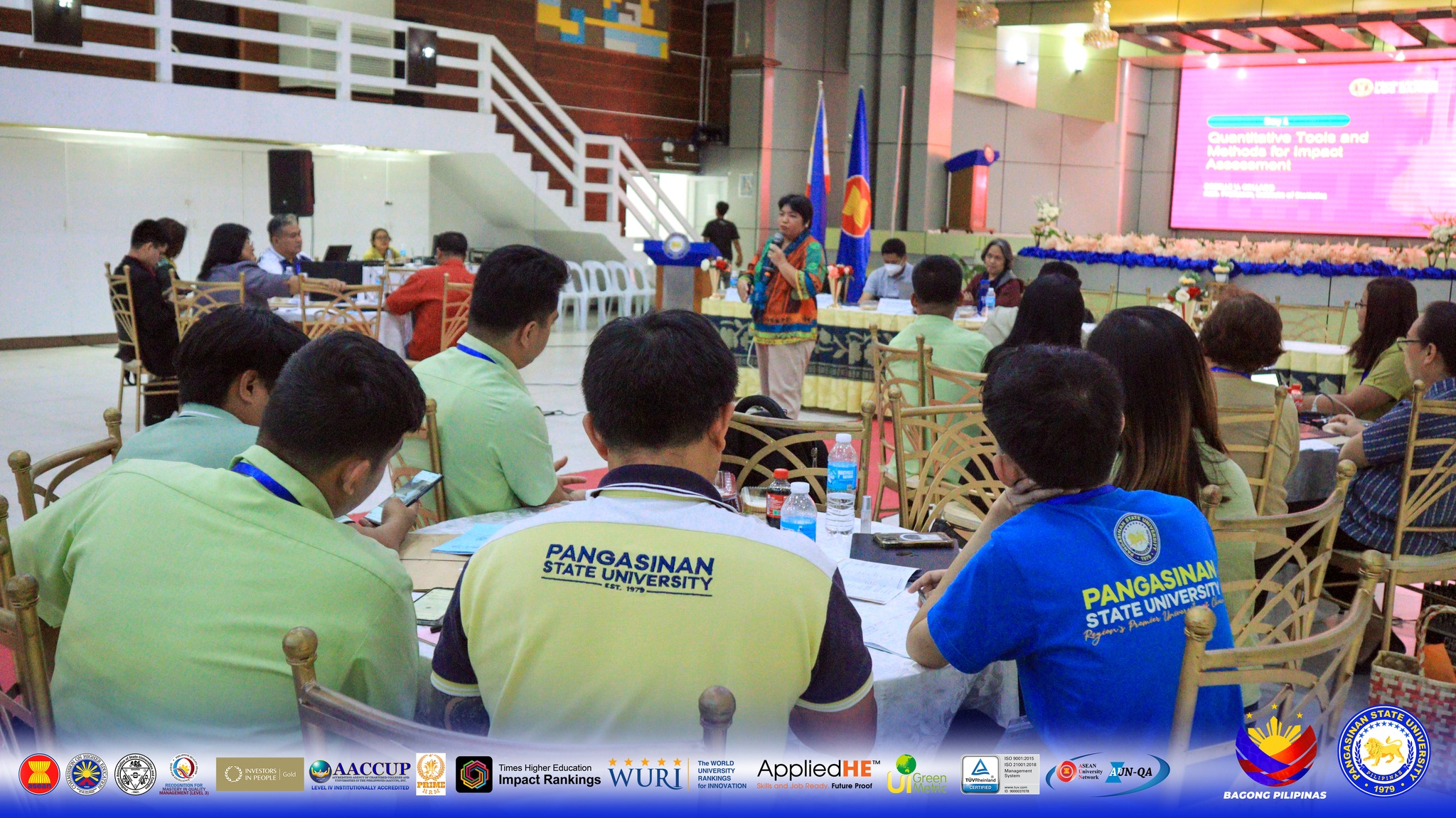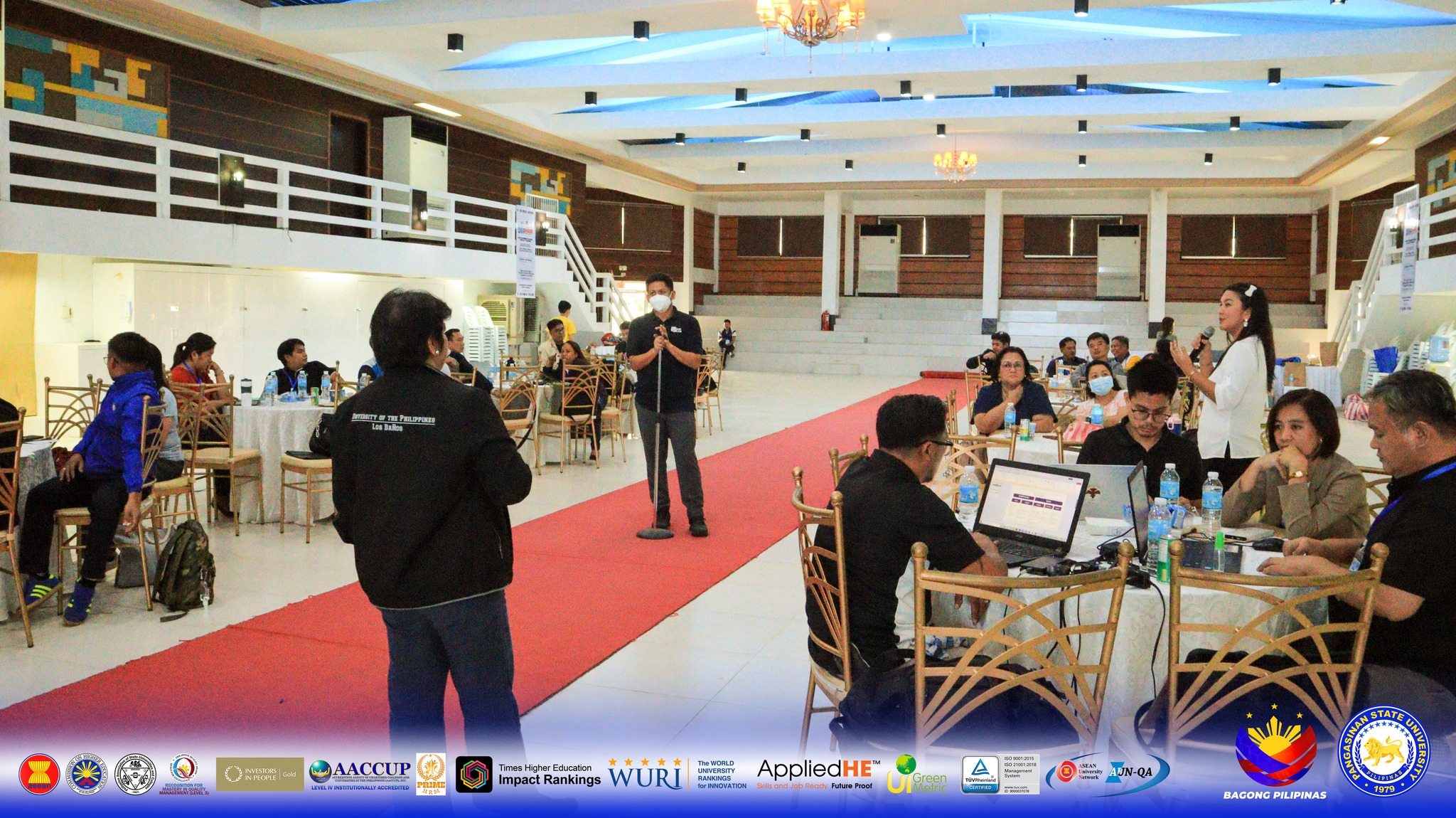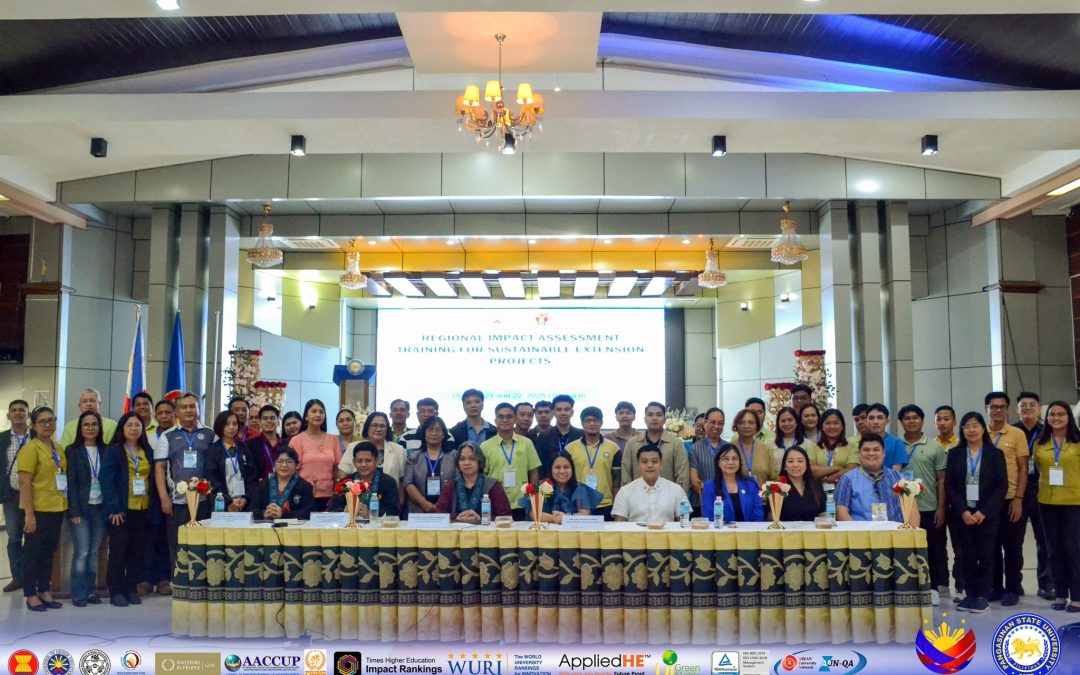
The two-day event brought together representatives from Higher Education Institutions (HEIs) in Region I as Impact Assessment has become a critical function in ensuring that extension and public service programs contribute meaningfully to community
development and national progress.
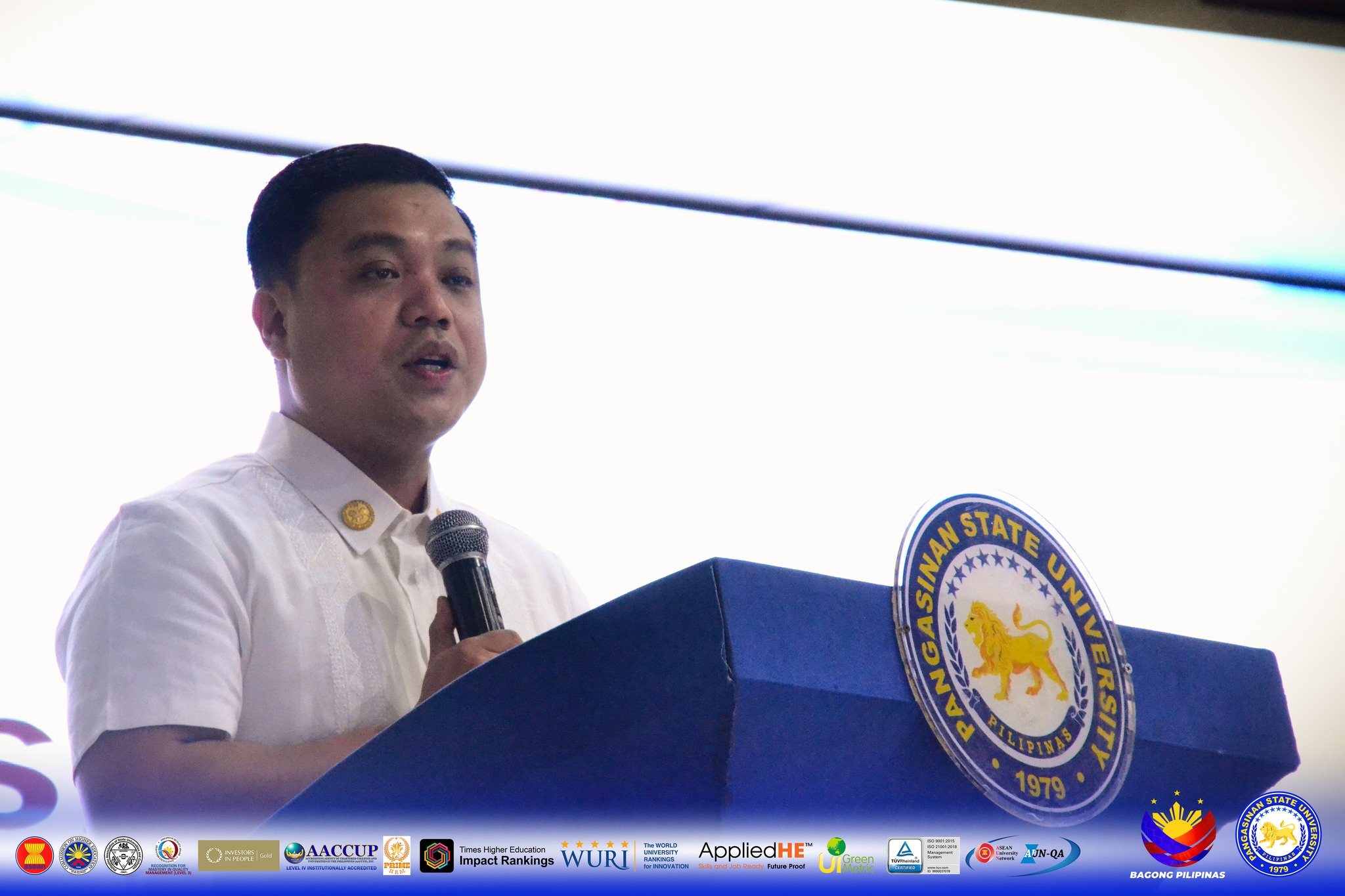
𝐔𝐧𝐢𝐯𝐞𝐫𝐬𝐢𝐭𝐲 𝐏𝐫𝐞𝐬𝐢𝐝𝐞𝐧𝐭 𝐃𝐫. 𝐄𝐥𝐛𝐞𝐫𝐭 𝐌. 𝐆𝐚𝐥𝐚𝐬 said the gathering is more than a training but more of an affirmation of the HEI’s commitment to ensure that the work they do in the field of extension is not merely an act of outreach, but a sustainable force for regional transformation.
“𝑊𝑒 𝑟𝑒𝑎𝑓𝑓𝑖𝑟𝑚 𝑡ℎ𝑎𝑡 𝑖𝑚𝑝𝑎𝑐𝑡 𝑎𝑠𝑠𝑒𝑠𝑠𝑚𝑒𝑛𝑡 𝑖𝑠 𝑛𝑜𝑡 𝑎 𝑏𝑢𝑟𝑒𝑎𝑢𝑐𝑟𝑎𝑡𝑖𝑐 𝑒𝑥𝑒𝑟𝑐𝑖𝑠𝑒, 𝑖𝑡 𝑖𝑠 𝑎 𝑚𝑜𝑟𝑎𝑙 𝑟𝑒𝑠𝑝𝑜𝑛𝑠𝑖𝑏𝑖𝑙𝑖𝑡𝑦. 𝐼𝑡 𝑖𝑠 𝑡ℎ𝑒 𝑙𝑒𝑛𝑠 𝑡ℎ𝑟𝑜𝑢𝑔ℎ 𝑤ℎ𝑖𝑐ℎ 𝑤𝑒 𝑚𝑒𝑎𝑠𝑢𝑟𝑒 𝑛𝑜𝑡 𝑜𝑛𝑙𝑦 𝑜𝑢𝑡𝑐𝑜𝑚𝑒𝑠 𝑏𝑢𝑡 𝑡ℎ𝑒 𝑑𝑒𝑝𝑡ℎ 𝑜𝑓 𝑜𝑢𝑟 𝑠𝑜𝑐𝑖𝑎𝑙 𝑐𝑜𝑛𝑠𝑐𝑖𝑒𝑛𝑐𝑒 𝑎𝑠 𝑎 𝑢𝑛𝑖𝑣𝑒𝑟𝑠𝑖𝑡𝑦. 𝑊ℎ𝑒𝑛 𝑤𝑒 𝑔𝑎𝑡ℎ𝑒𝑟 𝑑𝑎𝑡𝑎, 𝑎𝑛𝑎𝑙𝑦𝑧𝑒 𝑐ℎ𝑎𝑛𝑔𝑒, 𝑎𝑛𝑑 𝑑𝑜𝑐𝑢𝑚𝑒𝑛𝑡 𝑒𝑣𝑖𝑑𝑒𝑛𝑐𝑒 𝑜𝑓 𝑡𝑟𝑎𝑛𝑠𝑓𝑜𝑟𝑚𝑎𝑡𝑖𝑜𝑛, 𝑤𝑒 𝑎𝑟𝑒, 𝑖𝑛 𝑒𝑠𝑠𝑒𝑛𝑐𝑒, 𝑡𝑒𝑙𝑙𝑖𝑛𝑔 𝑡ℎ𝑒 𝑠𝑡𝑜𝑟𝑦 𝑜𝑓 ℎ𝑜𝑤 𝑒𝑑𝑢𝑐𝑎𝑡𝑖𝑜𝑛 𝑒𝑥𝑡𝑒𝑛𝑑𝑠 𝑏𝑒𝑦𝑜𝑛𝑑 𝑡ℎ𝑒 𝑤𝑎𝑙𝑙𝑠 𝑜𝑓 𝑡ℎ𝑒 𝑐𝑙𝑎𝑠𝑠𝑟𝑜𝑜𝑚 𝑎𝑛𝑑 𝑖𝑛𝑡𝑜 𝑡ℎ𝑒 ℎ𝑒𝑎𝑟𝑡 𝑜𝑓 𝑜𝑢𝑟 𝑐𝑜𝑚𝑚𝑢𝑛𝑖𝑡𝑖𝑒𝑠,” President Galas said in his welcome message.
In essence, 𝐕𝐢𝐜𝐞 𝐏𝐫𝐞𝐬𝐢𝐝𝐞𝐧𝐭 𝐃𝐫. 𝐑𝐚𝐳𝐞𝐚𝐥𝐞 𝐑𝐞𝐬𝐮𝐥𝐭𝐚𝐲 of the Research, Extension and Innovation Division of PSU said the training is designed to capacitate university administrators, extension coordinators and program
implementers in understanding and applying appropriate frameworks, methods and tools for impact assessment.
𝐑𝐞𝐠𝐢𝐨𝐧𝐚𝐥 𝐃𝐢𝐫𝐞𝐜𝐭𝐨𝐫 𝐃𝐫. 𝐂𝐡𝐫𝐢𝐬𝐭𝐢𝐧𝐞 𝐍. 𝐅𝐞𝐫𝐫𝐞𝐫 of the 𝐂𝐨𝐦𝐦𝐢𝐬𝐬𝐢𝐨𝐧 𝐨𝐧 𝐇𝐢𝐠𝐡𝐞𝐫 𝐄𝐝𝐮𝐜𝐚𝐭𝐢𝐨𝐧 – 𝐑𝐞𝐠𝐢𝐨𝐧𝐚𝐥 𝐎𝐟𝐟𝐢𝐜𝐞 𝐈, served as the event’s keynote speaker. Dr. Ferrer affirmed that for HEIs, evaluating the outcomes and long-term effects of programs is essential not only for internal improvement but also for accountability, policy formulation, resource mobilization and institutional accreditation as stipulated in CHED Memorandum Order No. 52, s.2016.
Additionally, trainers from University of the Philippines Los Banos masterfully imparted the needed skills and information in the training.
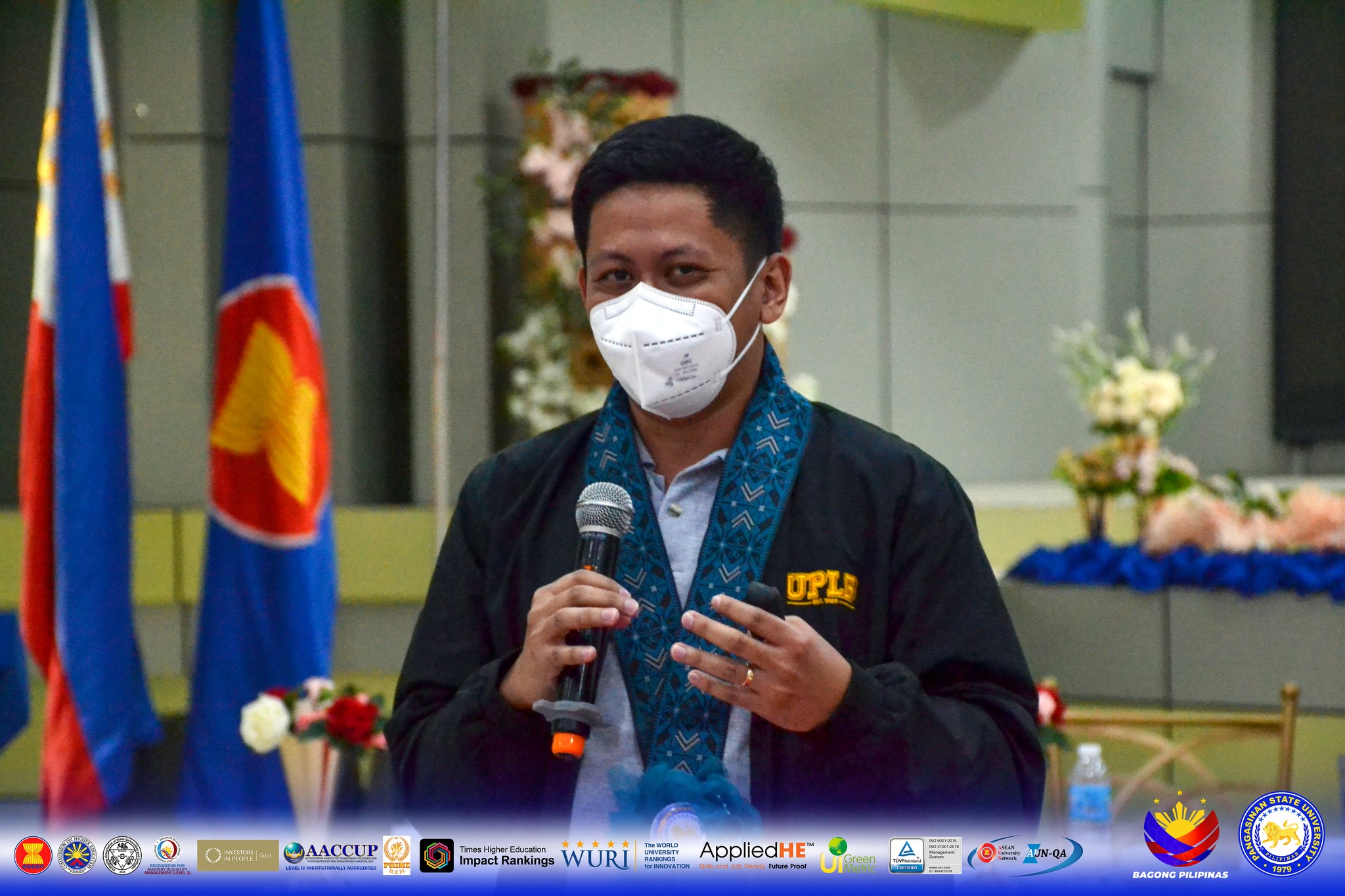
𝐔𝐏𝐋𝐁 𝐑𝐞𝐬𝐞𝐚𝐫𝐜𝐡𝐞𝐫 𝐌𝐫. 𝐅𝐫𝐚𝐧𝐜𝐢𝐬 𝐉𝐨𝐡𝐧 𝐅. 𝐅𝐚𝐝𝐞𝐫𝐨𝐠𝐚𝐨 from the Center for Strategic Planning and Policy Studies of the College of Public Affairs and Development delved on the foundation, theories, and principles of Impact Assessment as well as the measurements and
indicators.
On the other hand, 𝐀𝐬𝐬𝐭. 𝐏𝐫𝐨𝐟. 𝐑𝐨𝐬𝐞𝐥𝐥𝐞 𝐕. 𝐂𝐨𝐥𝐥𝐚𝐝𝐨 from the Institute of Statistics, College of Arts and Sciences at UPLB discussed the tools and methods for Impact Assessment both for quantitative and qualitative aspects.
By the second day, the trainers dealt with Impact Assessment best practices and the challenges in extension and public service, including the sustainability area.
Additionally, 𝐔𝐧𝐢𝐯𝐞𝐫𝐬𝐢𝐭𝐲 𝐄𝐱𝐭𝐞𝐧𝐬𝐢𝐨𝐧 𝐃𝐢𝐫𝐞𝐜𝐭𝐨𝐫 𝐃𝐫. 𝐋𝐨𝐫𝐞𝐧𝐚 𝐄𝐜𝐡𝐚𝐥𝐚𝐫 said rigorous impact assessments improve development effectiveness and allow implementers to adapt interventions based on evidence, not assumptions.
PSU, as an industry-driven state university, focuses not only on activity-based outputs but more importantly on the measurable social, economic, or environmental outcomes of its programs and projects.
#TatakPSU
#TatakPEMG