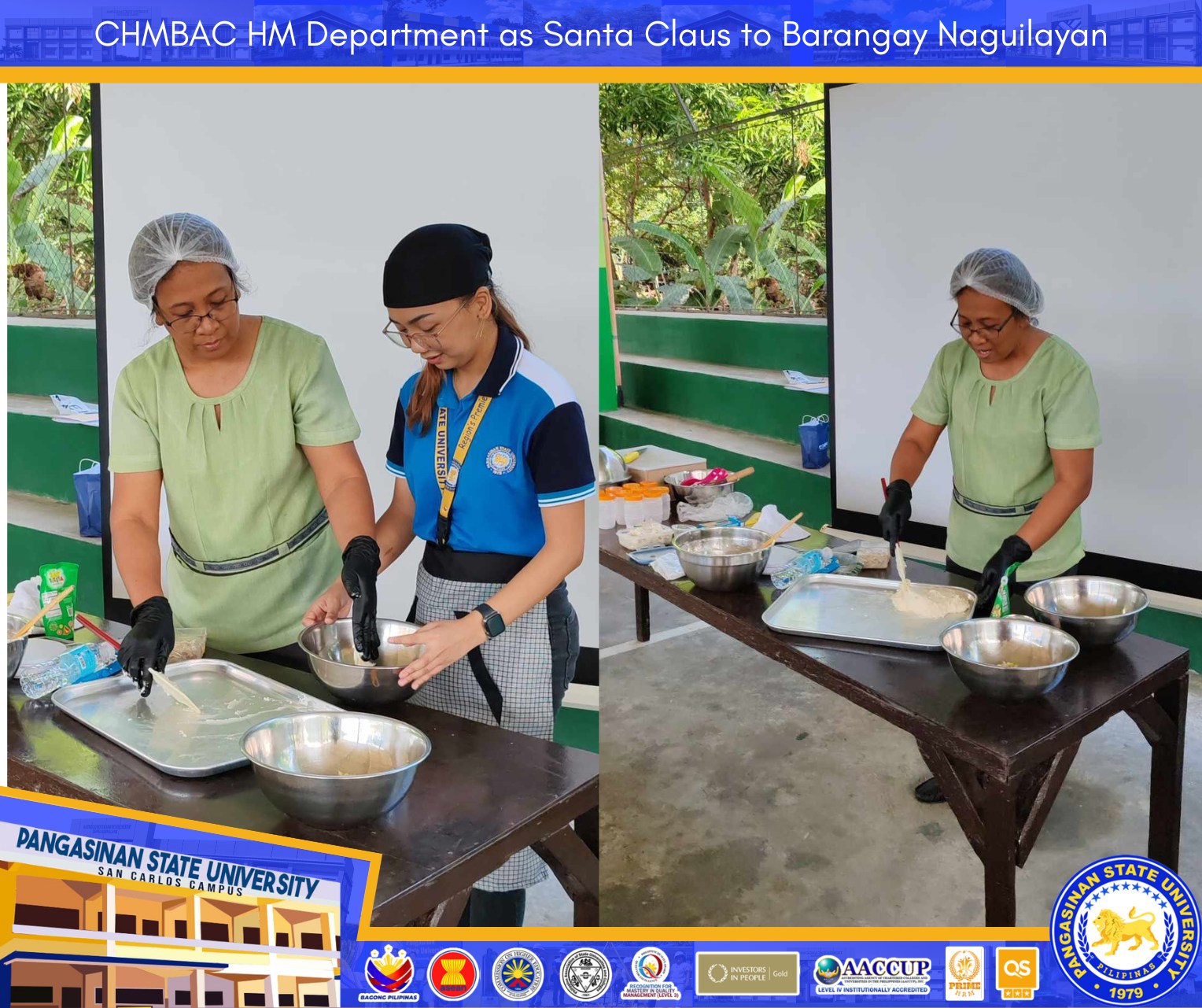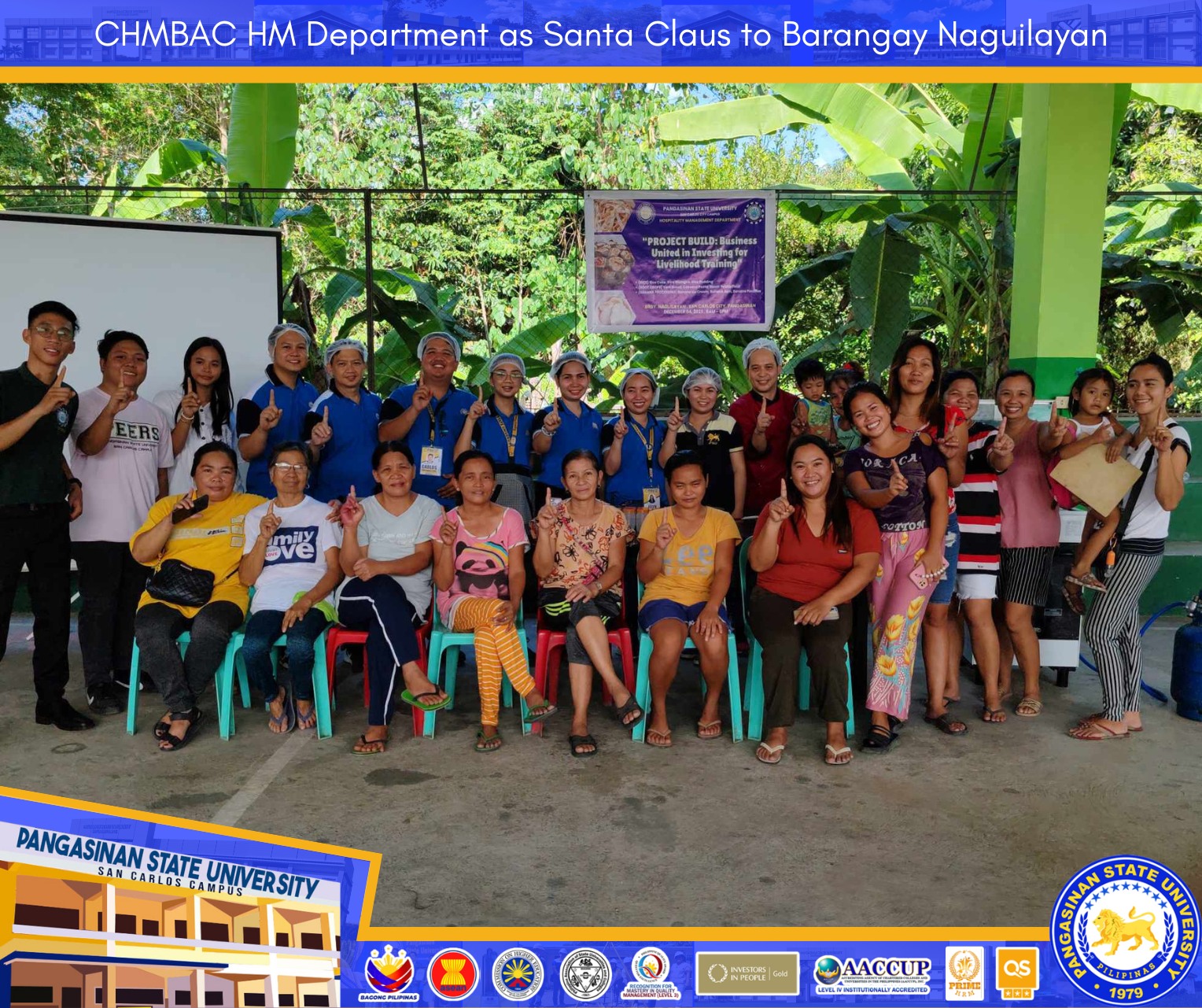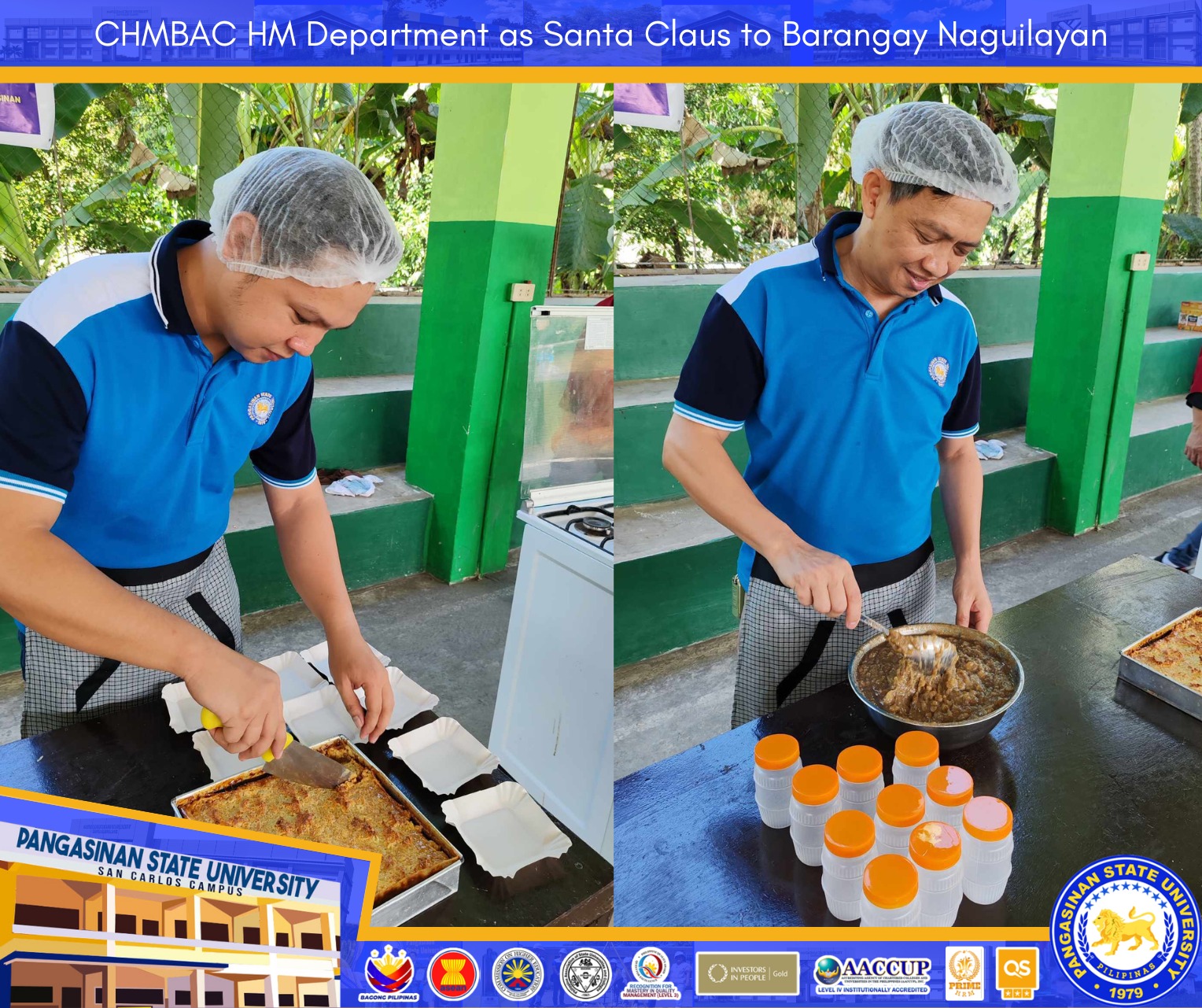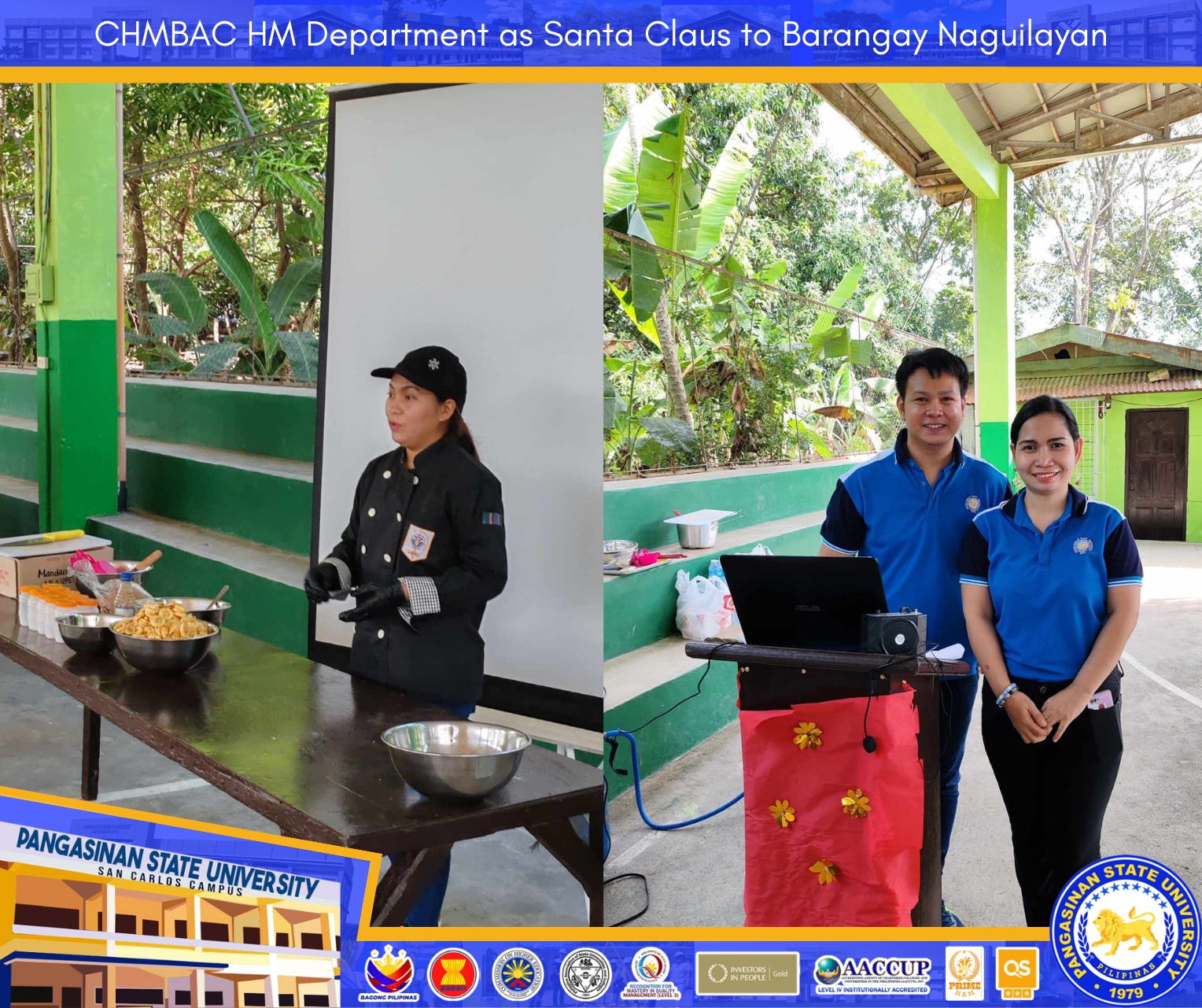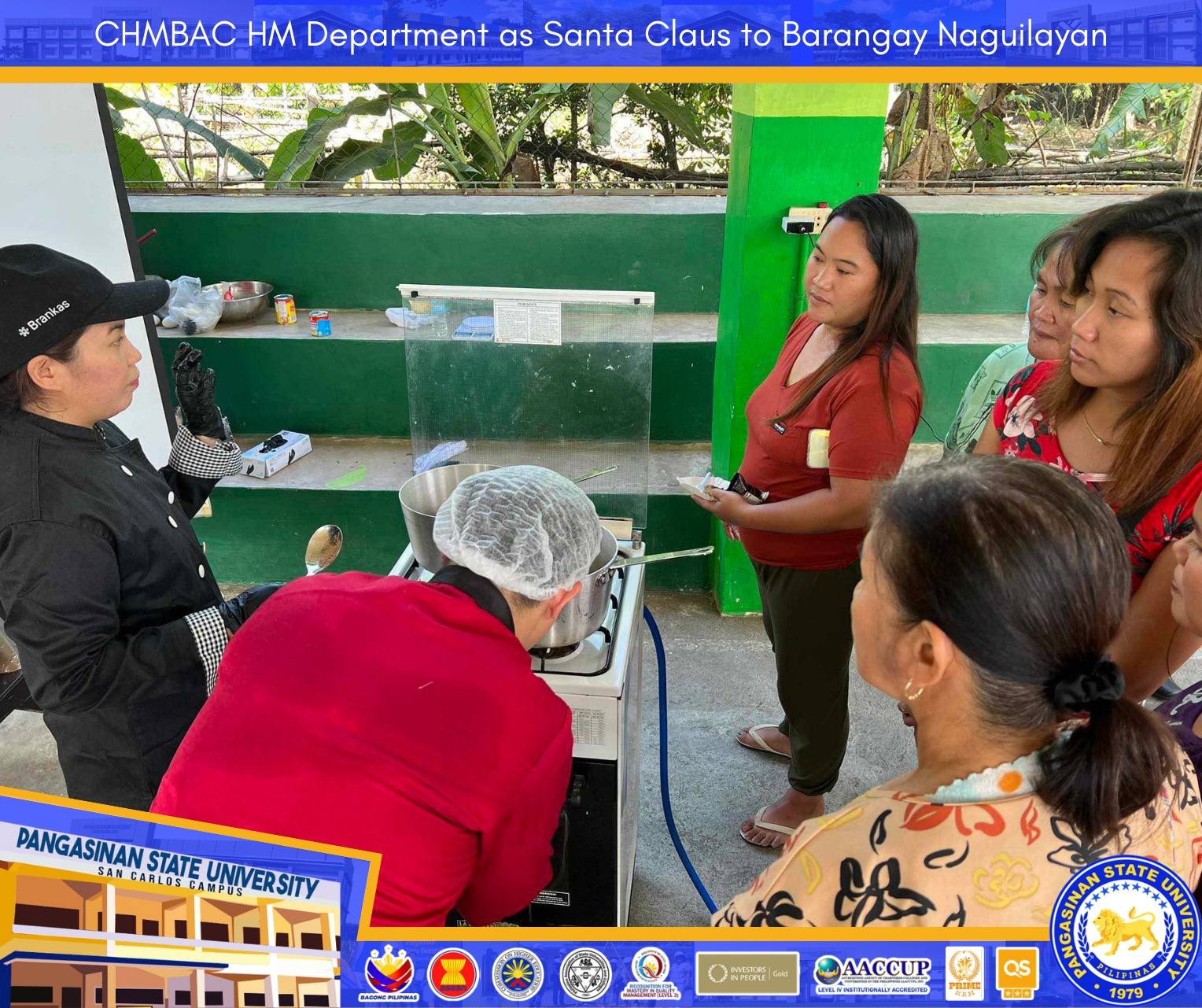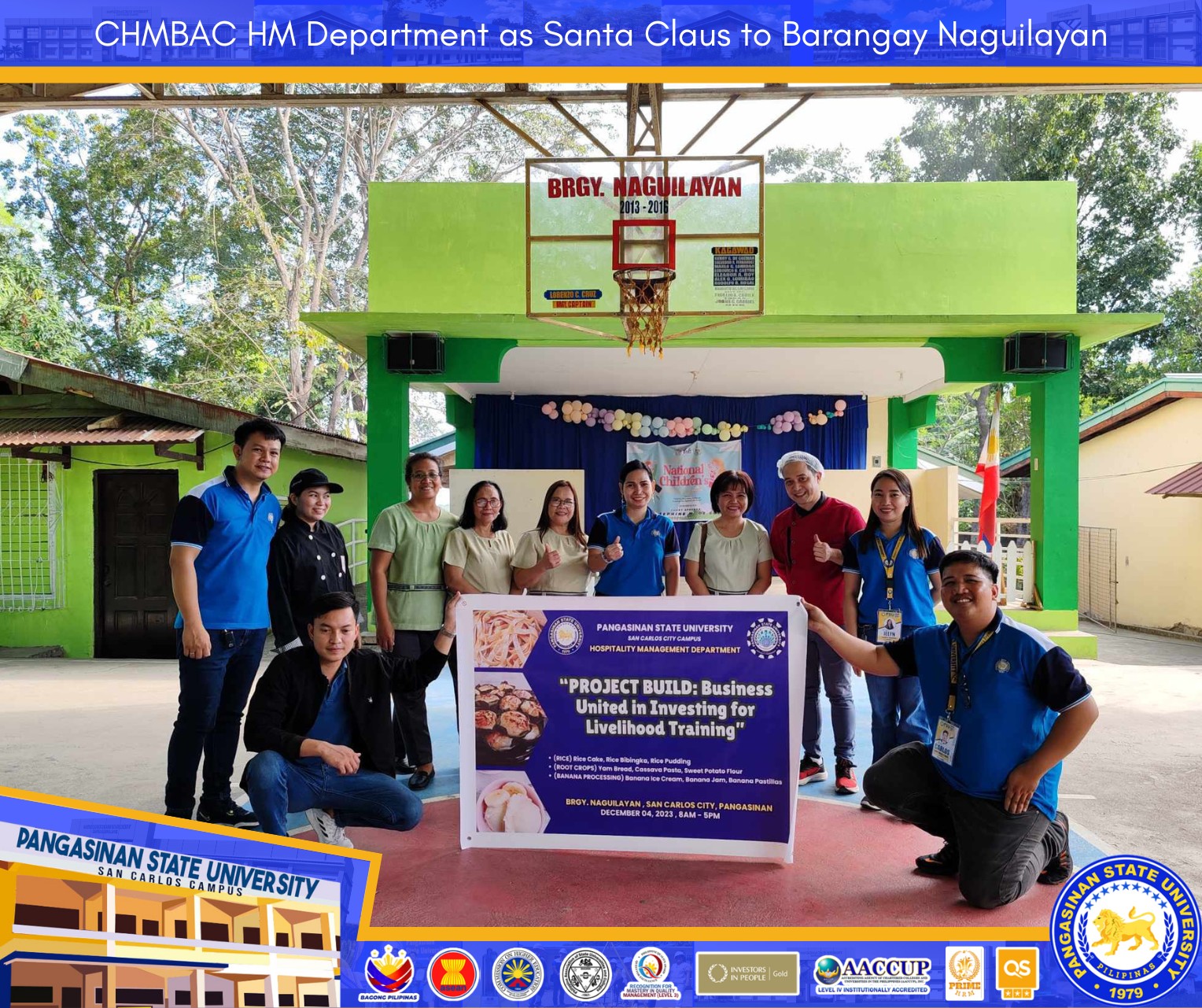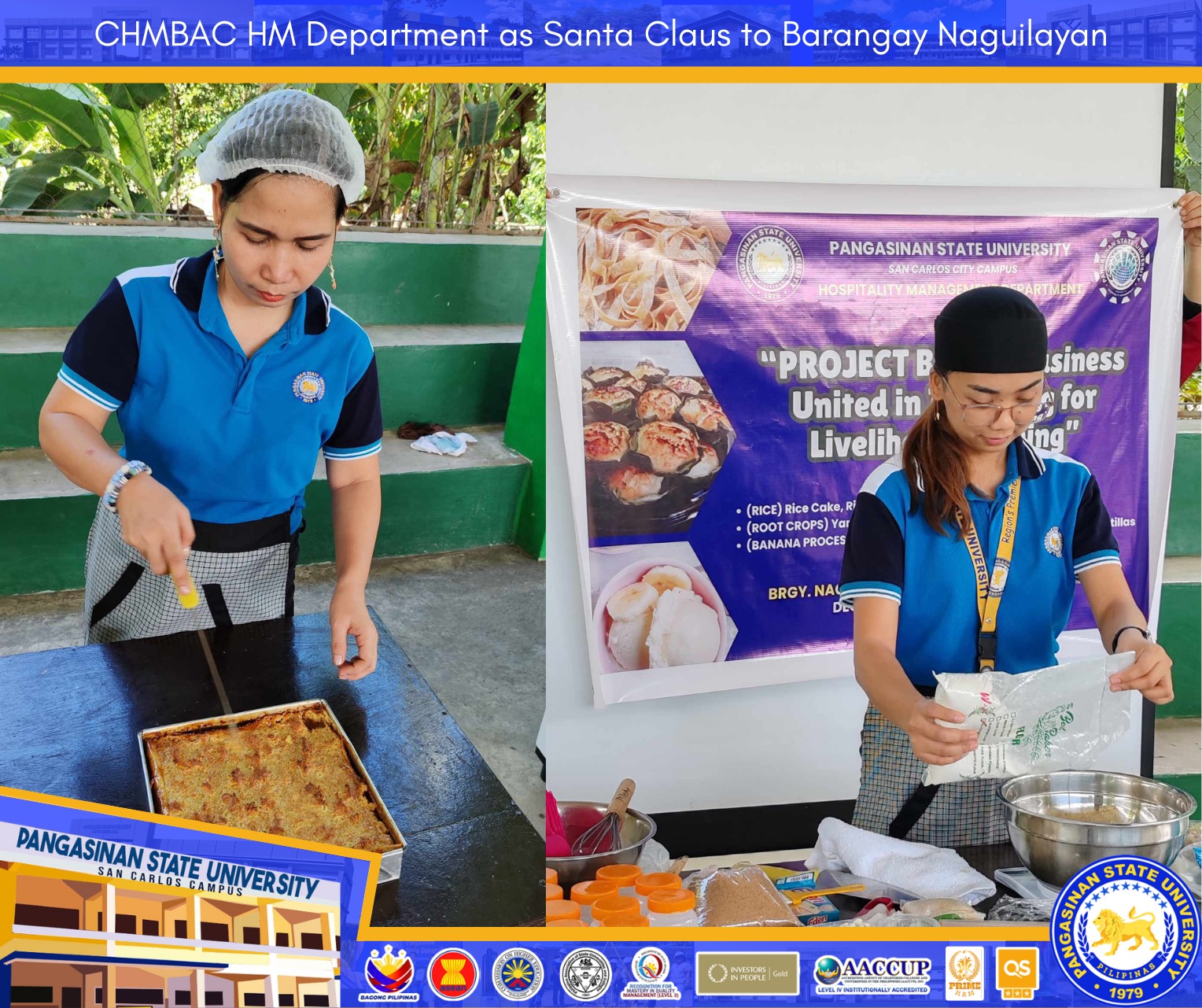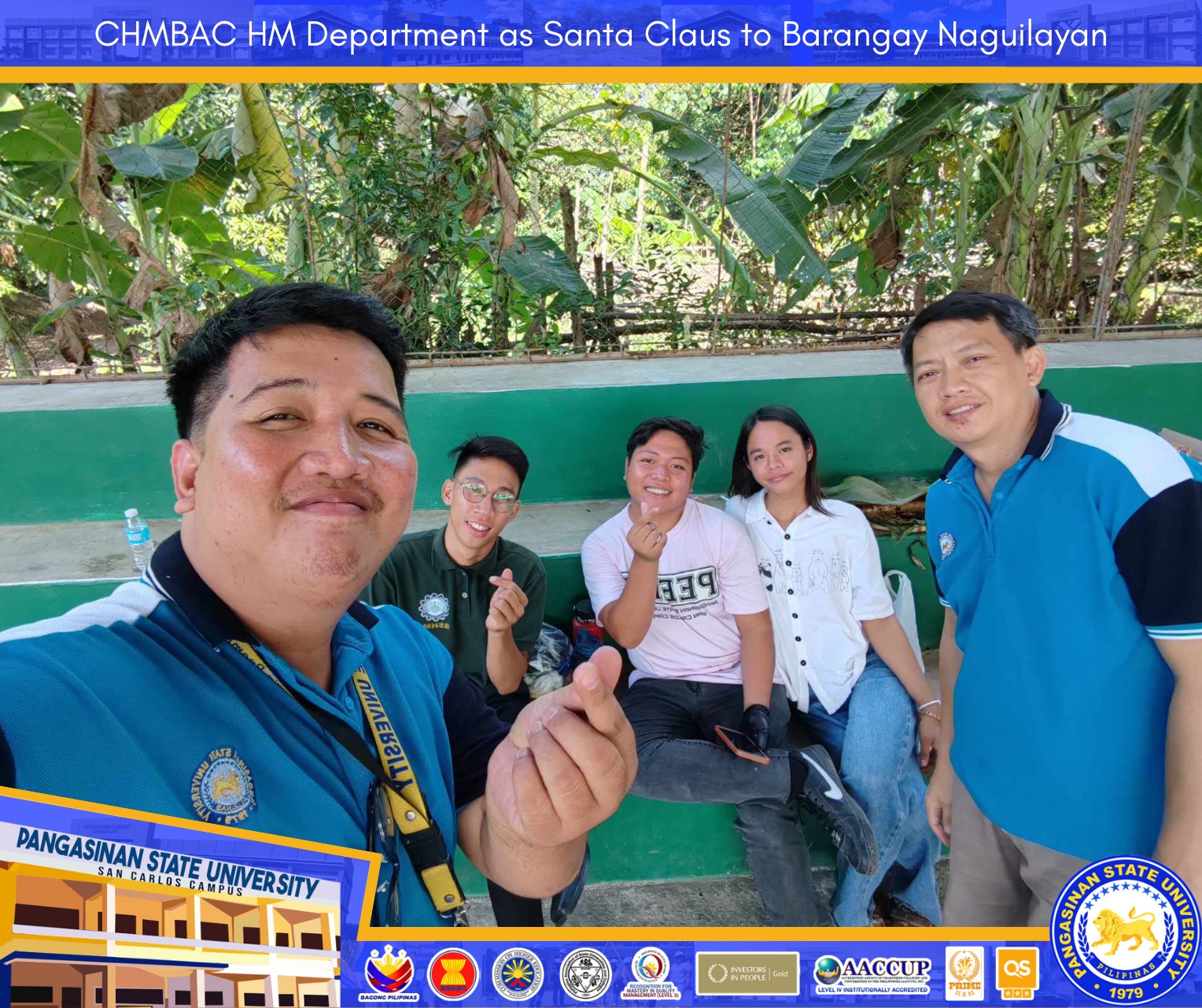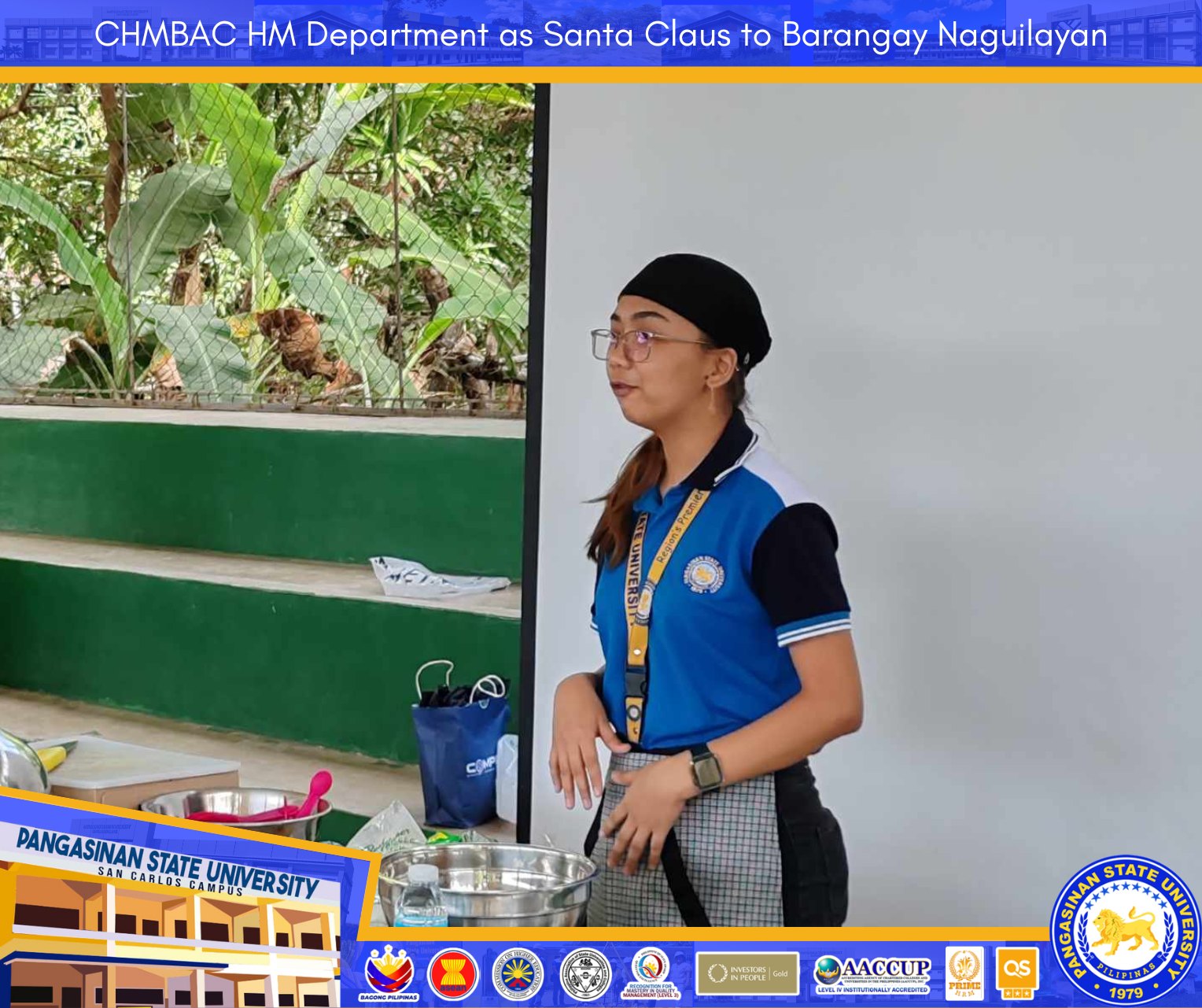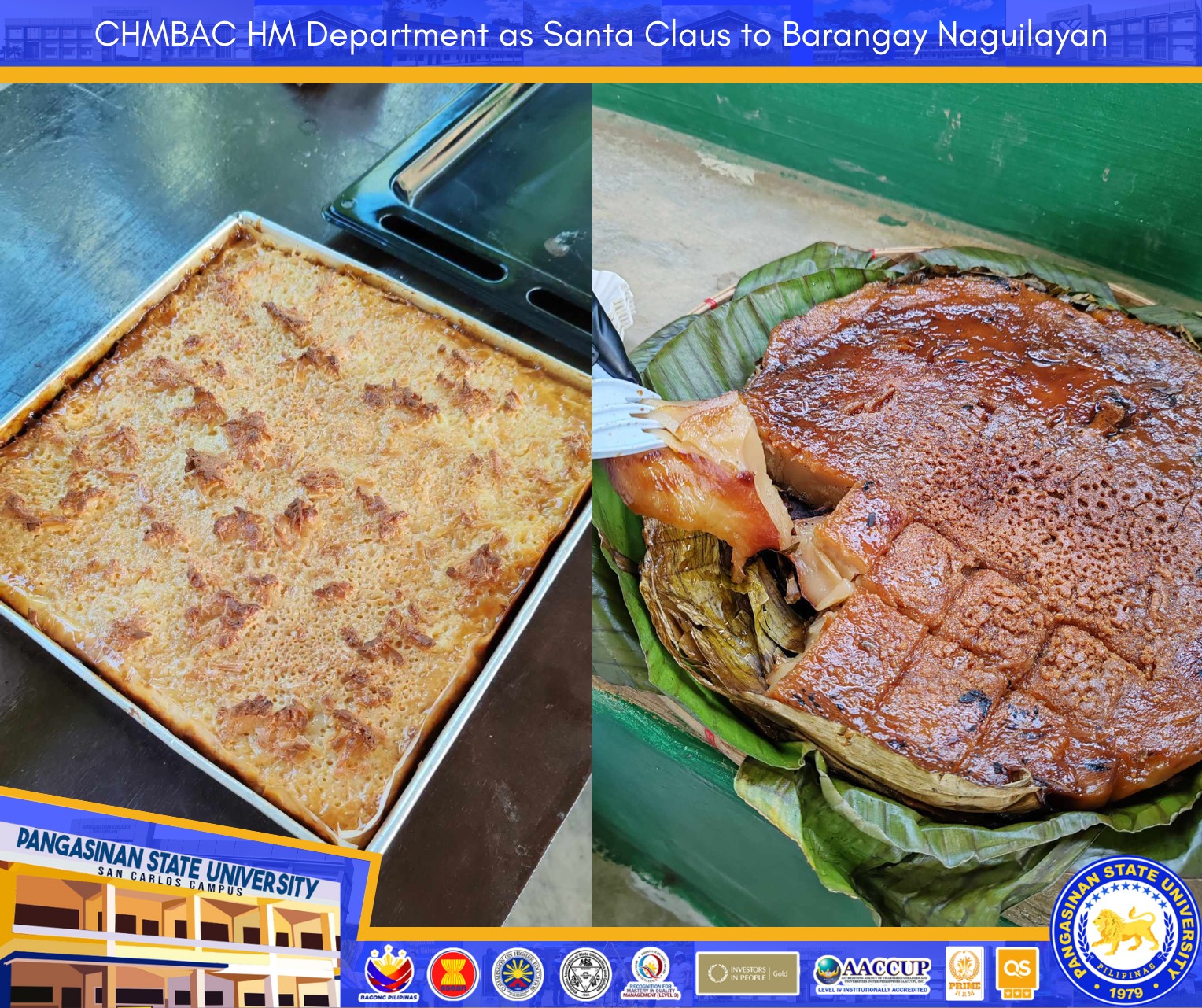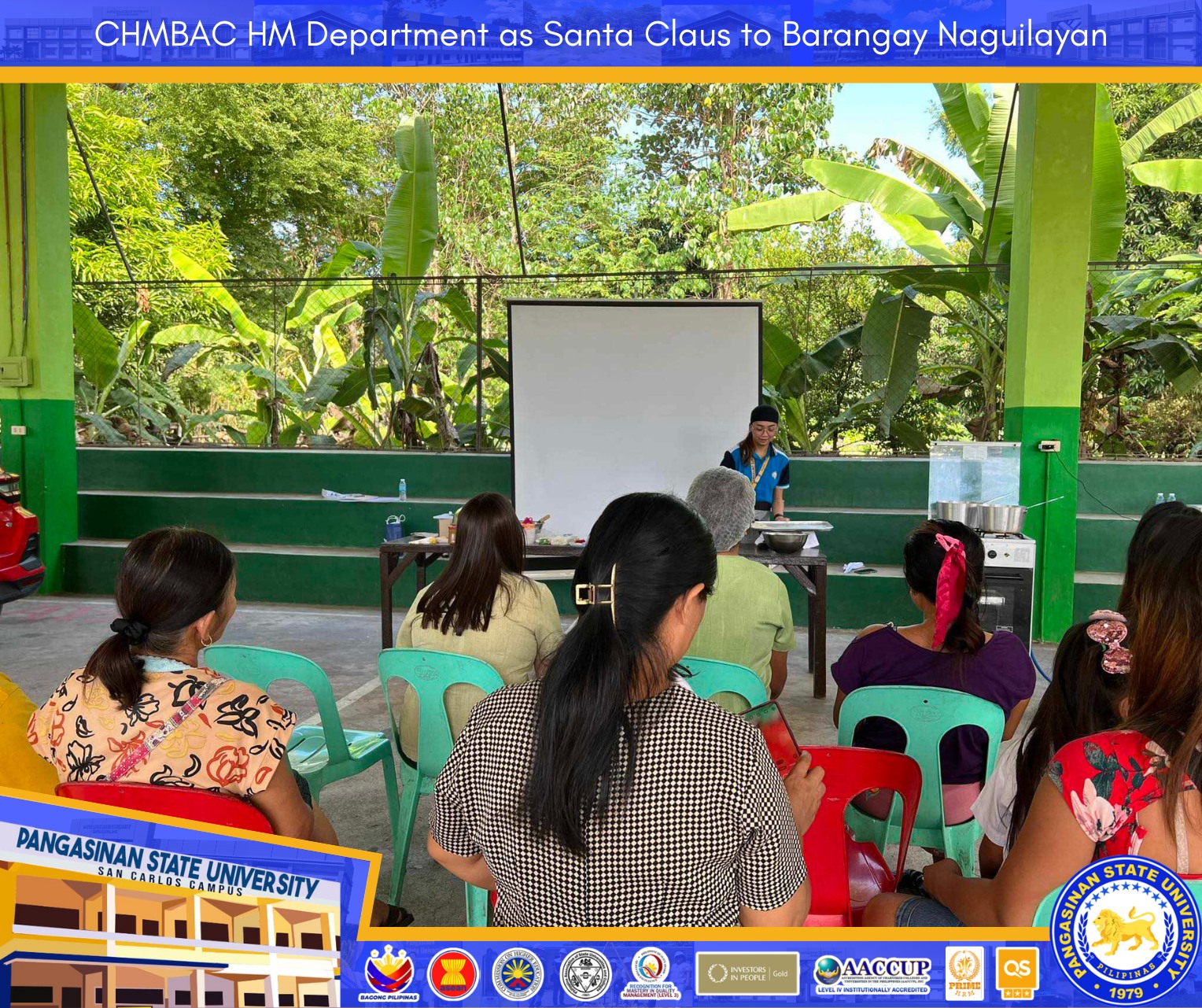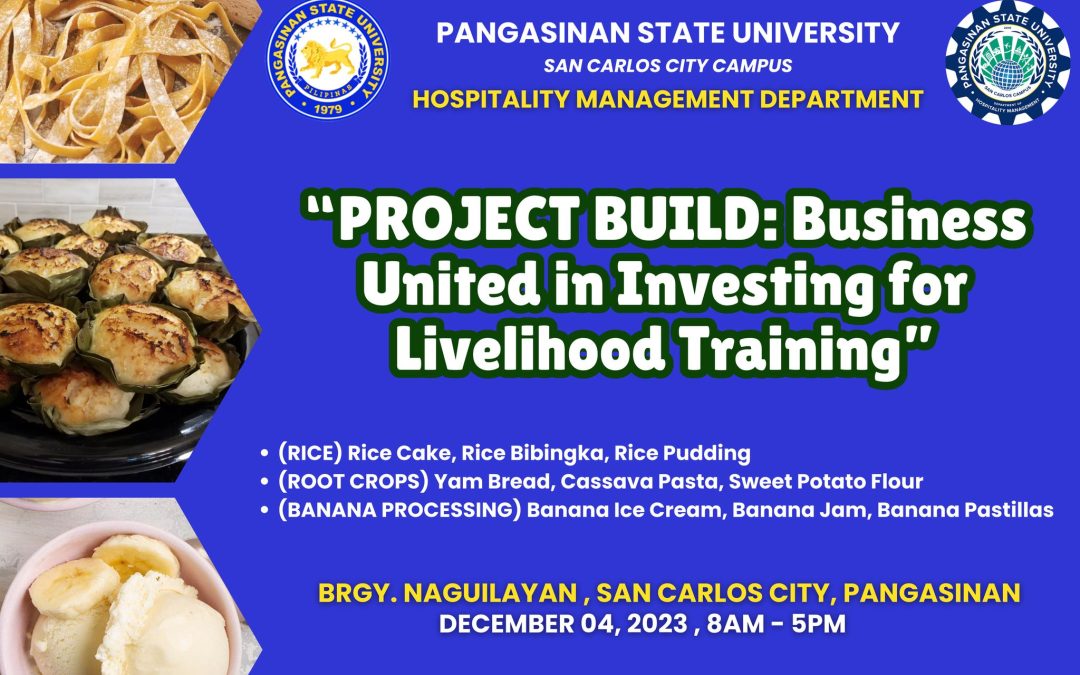
As the joyous season of Christmas approaches, the Project Build: Business United in Investing for Livelihood Training, an innovative extension program of the Hospitality Management department, emerges as a meaningful and transformative gift to the community of Brgy. Naguilayan. In the spirit of giving, this initiative not only imparts essential skills for economic empowerment but also symbolizes a commitment to the community’s prosperity.
The program gathered together out-of-school youth and barangay households on December 4 at the SCCP covered court for its comprehensive livelihood training aimed at empowering these citizens by creating wealth and jobs through small business enterprise development.
At its core, the initiative seeks to address the pressing need for sustainable economic growth within the community. As Dr. Liza L Quimson, Executive Director, emphasized before the presentation of extension proposals, “𝙀𝙭𝙩𝙚𝙣𝙨𝙞𝙤𝙣 𝙥𝙧𝙤𝙜𝙧𝙖𝙢𝙨 𝙨𝙝𝙤𝙪𝙡𝙙 𝙗𝙚 𝙙𝙚𝙨𝙞𝙜𝙣𝙚𝙙 𝙬𝙞𝙩𝙝 𝙨𝙪𝙨𝙩𝙖𝙞𝙣𝙖𝙗𝙞𝙡𝙞𝙩𝙮 𝙞𝙣 𝙢𝙞𝙣𝙙, 𝙢𝙤𝙫𝙞𝙣𝙜 𝙗𝙚𝙮𝙤𝙣𝙙 𝙤𝙣𝙚-𝙩𝙞𝙢𝙚 𝙘𝙤𝙢𝙢𝙪𝙣𝙞𝙩𝙮 𝙤𝙪𝙩𝙧𝙚𝙖𝙘𝙝 𝙖𝙘𝙩𝙞𝙫𝙞𝙩𝙞𝙚𝙨 𝙩𝙤 𝙘𝙧𝙚𝙖𝙩𝙚 𝙡𝙖𝙨𝙩𝙞𝙣𝙜 𝙖𝙣𝙙 𝙢𝙚𝙖𝙣𝙞𝙣𝙜𝙛𝙪𝙡 𝙞𝙢𝙥𝙖𝙘𝙩𝙨.”
Recognizing that financial stability is a key factor in individual and collective well-being, this project of Dr. Marmie R. Poquiz, Chairperson and Dr. Juliet V. Menor, College Dean, with the entire department, aims to equip residents, particularly the youth, with the skills and knowledge necessary to establish and manage small business enterprises.
The livelihood training will focus on three key areas – rice processing, root crops processing, and banana processing. These were strategically chosen to align with both local agricultural strengths and market demands, ensuring that participants gain skills that are not only relevant but also have the potential to contribute significantly to the community’s economic landscape.
Furthermore, the program acknowledges the significance of inclusivity by specifically targeting out-of-school-youth. In doing so, it addresses not only the immediate need for employment but also the long-term goal of breaking the cycle of poverty through education and skill development. The proponents of the project believe that by investing in the youth, they are investing in the future leaders and economic drivers of the community.